Burst Pipe Repair Millcreek: Winter Freeze Protection Guide
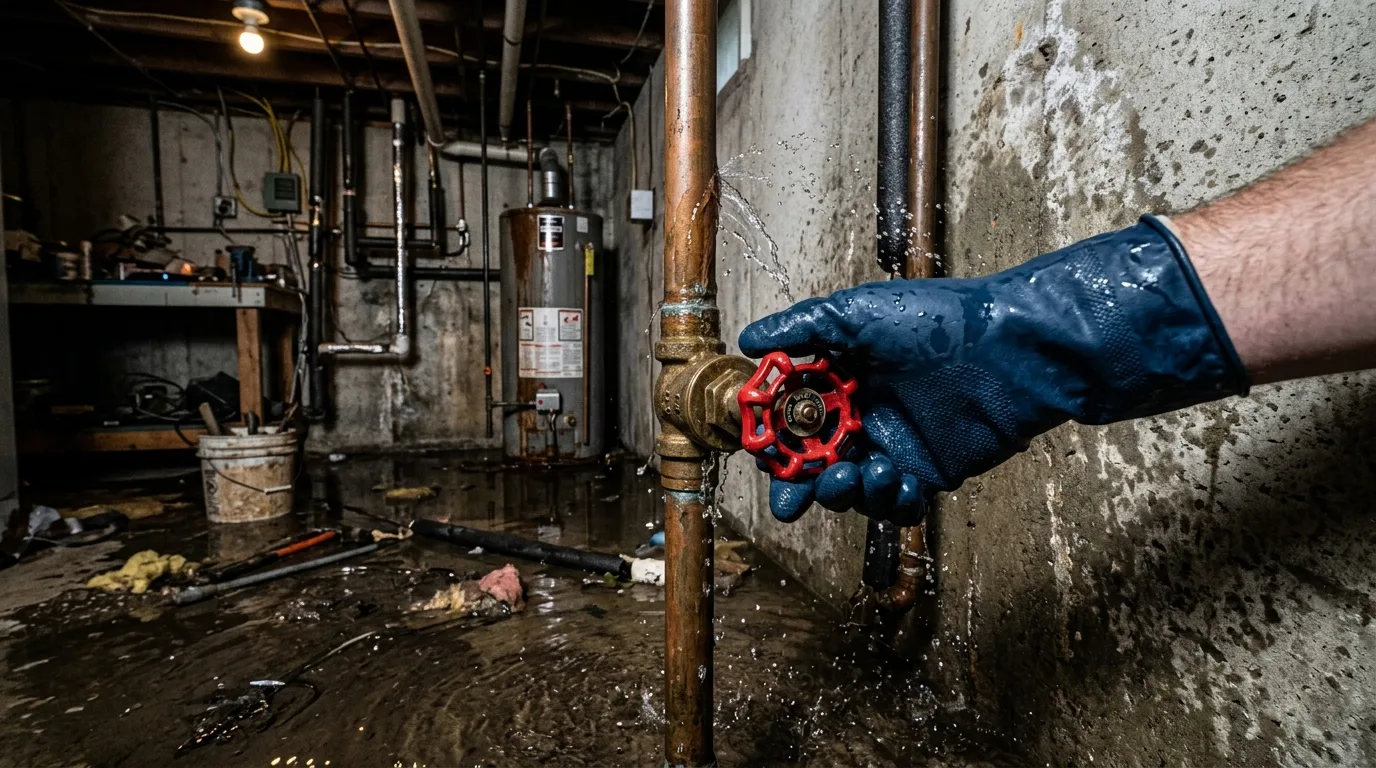
Every winter, Millcreek homeowners experience burst pipes — some wake up to the sound of water running inside a wall, others come home from work to find soaked flooring and a water meter spinning. It’s one of the most common and fastest-developing water damage events, and the outcome depends heavily on how quickly the pipe is shut off and how quickly professional extraction begins.
In this guide, we cover how pipes freeze and burst in Millcreek’s specific climate, which pipe locations carry the highest risk, what to do the moment a pipe bursts, and how professional restoration returns your home to pre-loss condition.
Pipe Burst in Your Millcreek Home? Call Now.
Shut off your water main and call (877) 698-1311 — we dispatch 24/7 throughout Salt Lake County.
Why Pipes Burst So Often in Millcreek During Winter
The physics of pipe freezing is simple: water expands when it freezes, and that expansion creates pressure inside a sealed pipe that eventually exceeds the strength of the pipe wall or fitting. What makes Millcreek particularly prone to burst pipe events is not just the cold temperatures — it’s the freeze-thaw cycle.
Millcreek winters average overnight lows near 22°F in January, with temperatures often crossing the freezing threshold multiple times in a single week. Each freeze-thaw cycle creates thermal stress on pipe materials and fittings. Copper pipes develop fatigue at stress points. PVC and CPVC joints that thermally expand and contract repeatedly develop micro-failures at fittings. The pipe that holds up through five freeze cycles may fail on the sixth.
The Evergreen and Canyon Rim neighborhoods of Millcreek include significant housing stock built in the 1950s and 1960s, when pipe insulation standards were minimal. Supply lines in exterior walls, under kitchen cabinets on exterior-facing walls, in crawlspaces, and in attached garages are particularly vulnerable. Average annual snowfall of 65 inches means exterior walls can experience sustained cold-side temperatures well below freezing for weeks at a time when snow accumulates against them.
Highest-Risk Pipe Locations in Millcreek Homes
Exterior walls: Supply lines routed through exterior wall cavities are directly exposed to outdoor temperature fluctuation. This is the most common burst pipe location across the Wasatch Hollow and Olympus Hills areas.
Unheated crawlspaces: Pipes running through crawlspaces with inadequate insulation or vent covers left open in winter freeze from below. Crawlspace temperature can approach outdoor lows in January.
Attached garages: Garages are commonly unheated and share a wall with the home’s heated interior. Water supply lines serving garage utility sinks or routed through the garage wall are high-risk.
Outdoor hose bibs: Frost-free sillcocks that were not properly winterized (hose left attached, preventing the frost-free mechanism from draining) freeze inside the wall.
Attic supply lines: Less common but extremely damaging when they occur — attic pipes that freeze and burst can release water through ceiling cavities affecting multiple floors.
What to Do Immediately When a Pipe Bursts
1. Shut off the main water supply. Know where your main shutoff is before winter — a burst pipe during a February night requires shutting off the main in seconds, not after searching for it in a water-soaked basement. Most Millcreek homes have the main shutoff near the water meter, typically in the basement or utility room.
2. Turn off electricity to affected areas. If water is entering areas with electrical outlets, light fixtures, or the electrical panel, shut off power at the breaker before entering.
3. Call Millcreek Water Damage Restoration immediately. Every minute the pipe was flowing before shutoff has added damage. Professional truck-mounted extraction begins the recovery.
4. Document with photos. Capture the burst location, water spread, and all affected areas before the crew arrives. This documentation is critical for your insurance claim.
5. Open cabinet doors under sinks to allow warm air to reach exposed pipes and begin thawing any remaining frozen sections.
6. Do not attempt to use portable heaters to thaw pipes without understanding where the ice blockage is — applying heat to the wrong section while the frozen blockage is still sealed can increase pressure and cause a second failure.
Emergency Burst Pipe Extraction in Millcreek
IICRC-certified, Utah DOPL-licensed, 24/7 response. Call (877) 698-1311 for immediate dispatch throughout Salt Lake County.
Types of Burst Pipe Events in Millcreek
Supply line burst in exterior wall: The most common and often most extensive event — water flows inside the wall cavity before any visible sign appears, saturating framing and insulation over hours. Wall opening is required to address moisture and reconstruct.
Copper fitting failure: Fittings at elbow joints are stress concentration points during freeze-thaw cycling. Fitting failures typically release more water more rapidly than a pipe wall split.
Frost-free hose bib failure: Water enters inside the wall at the pipe connection behind the faucet body, typically affecting an area limited to the wall section around the bib.
Crawlspace pipe burst: Water drops to the crawlspace floor, potentially affecting the underside of subfloor materials and accumulating in the crawlspace before discovery. Crawlspace extraction requires specialized equipment.
How Burst Pipe Restoration Works
Professional burst pipe restoration in Millcreek follows a sequence: extraction of standing water, moisture mapping of the full affected area, strategic material opening to expose saturated wall cavities, structural drying with commercial equipment, and reconstruction of all removed materials.
The moisture mapping step is where professional restoration differs critically from DIY response. A pipe that burst in an exterior wall may have saturated framing over a 6-foot section while only 2 feet of drywall shows visible discoloration. Moisture meters quantify the full extent — determining exactly what must be opened and dried before reconstruction can begin.
Reconstruction includes new insulation, drywall, tape, texture, and paint. For the pipe location itself, a licensed plumber replaces the damaged section — and this is the opportunity to reroute vulnerable pipe runs to interior wall cavities where appropriate. Millcreek Building Department permits are required for both plumbing and structural repair work.
Practical Winter Prevention Steps for Millcreek Homeowners
Insulate exposed pipe runs: Pipe insulation sleeves on any supply line in an unheated space are a $50–$200 investment that can prevent a $5,000 event. Focus on crawlspaces, attached garage walls, and any exterior wall sections.
Seal exterior wall penetrations: Cold air infiltrates through electrical outlets, pipe penetrations, and construction gaps in exterior walls. Sealing these reduces the cold side temperature around pipes in those wall cavities.
Set thermostat to 55°F minimum when away: Even in an unoccupied house in winter, maintaining 55°F provides a buffer against pipe-threatening cold throughout interior spaces.
Disconnect garden hoses before first frost: A hose left connected prevents the frost-free mechanism from draining the stem — turning a frost-free sillcock into a freeze risk.
Know your main shutoff location: Before winter, locate the main water shutoff and make sure it operates smoothly. A seized or difficult-to-operate shutoff can cost critical minutes during a pipe burst emergency.
Frequently Asked Questions
How long does burst pipe restoration take in Millcreek?
Total restoration from the burst event through completed reconstruction typically takes 5–14 days. Extraction takes 1–3 hours; structural drying runs 3–5 days with daily moisture monitoring; reconstruction of the opened wall sections takes 2–7 days. The plumbing repair itself can often be completed within the first day.
Does homeowner’s insurance cover burst pipe damage in Millcreek?
Most standard homeowner’s insurance policies cover sudden and accidental burst pipe damage including water mitigation and structural repairs. The key word is “sudden” — a slow leak from a corroded pipe that went unaddressed does not qualify as sudden and accidental. Document the event’s origin and timeline carefully for your claim.
Should I heat my Millcreek crawlspace to prevent pipe freezing?
Crawlspace conditioning is one approach. A simpler and often more effective approach for most Millcreek homes is: close foundation vents for winter (many crawlspaces are designed for seasonal vent closure), insulate water pipes with foam pipe insulation, and ensure the crawlspace access door seals adequately.
Burst Pipe Damage in Millcreek — Full Restoration
From extraction to rebuild, Millcreek Water Damage Restoration handles the complete process. Call (877) 698-1311 — 24/7 throughout Salt Lake County.
Related resources: