Emergency Water Extraction Millcreek UT: What to Expect
The moment you discover standing water in your home, you have approximately 24–48 hours before mold colonization becomes a factor. What happens in those first hours — and specifically the quality and speed of emergency water extraction — determines whether you’re looking at a $3,000 restoration or a $12,000 one. Most Millcreek homeowners have never been through a significant water event before and don’t know what to expect when they call a restoration company. This guide walks you through the entire process.
In this post, we cover what emergency water extraction involves step-by-step, what equipment is used and why, what you should do before the crew arrives, and how extraction leads into structural drying and restoration.
Water in Your Home Right Now? Call Now.
24/7 emergency water extraction throughout Millcreek and Salt Lake County. (877) 698-1311.
Why Speed Matters for Emergency Water Extraction in Millcreek
Each hour of delay after a water intrusion event corresponds to measurable additional damage. In the first hour, water spreads along the path of least resistance — across hard floors, under baseboards, and into the lowest accessible spaces. By hour four, water has wicked into drywall, insulation, and subfloor assemblies. By hour 24, structural saturation is extensive and mold conditions are developing inside wall cavities. By hour 48, mold colonization is active in areas that received early moisture exposure.
This progression is accelerated by Millcreek’s climate in an unexpected way: Utah’s low ambient humidity causes surface evaporation that can mask ongoing moisture accumulation inside walls. A homeowner who discovers a burst pipe, mops up the standing water, and runs fans may believe the situation is resolved — while inside the wall assembly, moisture content remains at levels that support active mold growth for weeks.
What to Do Before the Crew Arrives
Shut off the water source. If the water is coming from a broken pipe or appliance, locate your main water shutoff and turn it off. Every minute the water flows adds to the damage scope.
Turn off electricity in affected areas if safe to do so. Do not enter standing water in an area where electrical equipment may have been submerged without first cutting power at the breaker.
Move valuables to dry areas if safe and without disturbing the standing water more than necessary.
Document with photos and video before any cleanup begins. Walk through affected areas and photograph all standing water, saturated materials, and affected surfaces. This documentation is critical for your insurance claim — capture it before the crew arrives and begins extraction.
Call your insurance company to report the claim. Your policy may have a notification requirement. Do not delay this call — some policies require prompt reporting.
Do not run HVAC or air conditioning — circulating air through a water-damaged space before extraction and assessment can spread contamination and make moisture mapping more difficult.
The Emergency Water Extraction Process
Step 1: Arrival and Initial Assessment. Our technician arrives with a moisture meter and thermal imaging camera and performs an immediate walkthrough to assess contamination category, identify water sources, and determine the full extent of water migration. This assessment takes 20–30 minutes and informs the extraction strategy.
Step 2: Equipment Setup. Truck-mounted extraction equipment is connected — a high-capacity vacuum system powered by the truck’s engine, capable of removing hundreds of gallons per hour. Portable extraction units supplement the truck-mount in areas the truck hose cannot reach.
Step 3: Bulk Water Extraction. All standing water is removed from hard floors using wand attachments. This phase addresses visible standing water and typically takes 1–3 hours for an average basement event in Millcreek.
Step 4: Carpet and Subfloor Extraction. If carpet is present, specialty extraction tools pull water from carpet fibers, backing, and carpet pad. Carpet pad is almost always removed — it retains moisture and cannot be adequately dried in place. Subfloor extraction wands address water beneath hard flooring.
Step 5: Moisture Mapping. After bulk extraction is complete, the technician performs detailed moisture mapping using calibrated meters and thermal imaging. This mapping identifies every area where moisture has migrated — inside wall cavities, under flooring, in ceiling assemblies — that cannot be found visually. This step determines which materials can be dried in place and which must be removed.
Emergency Water Extraction in Millcreek, UT
IICRC-certified crews with truck-mounted extraction. Call (877) 698-1311 — we respond 24/7 throughout Salt Lake County.
Types of Water Extraction Equipment
Truck-mounted extractors: The most powerful option — a vacuum system powered by the truck’s engine capable of removing high volumes of water rapidly. Used for standing water in basements, flooded rooms, and large events.
Portable extractors: Self-contained units used in areas the truck-mount cannot reach (interior rooms, upper floors, tight spaces).
Wand attachments: Different wand heads for hard floors, carpet, and crevices. Specialty upholstery wands for furniture extraction.
Submersible pumps: For rapidly removing high volumes of standing water (more than 2 inches) in basements before truck-mount extraction begins.
Carpet extraction wands: Specifically designed to pull water from carpet fiber and backing during extraction passes.
Practical Uses of Emergency Water Extraction
Burst pipe events: Winter is peak season for burst pipe calls in Millcreek. When a pipe behind a wall ruptures, water can flow for hours before discovery. Truck-mounted extraction is the only effective response for the volume involved. In Canyon Rim homes with older copper supply lines, the pipe burst is often inside an exterior wall — all the more reason for immediate professional response.
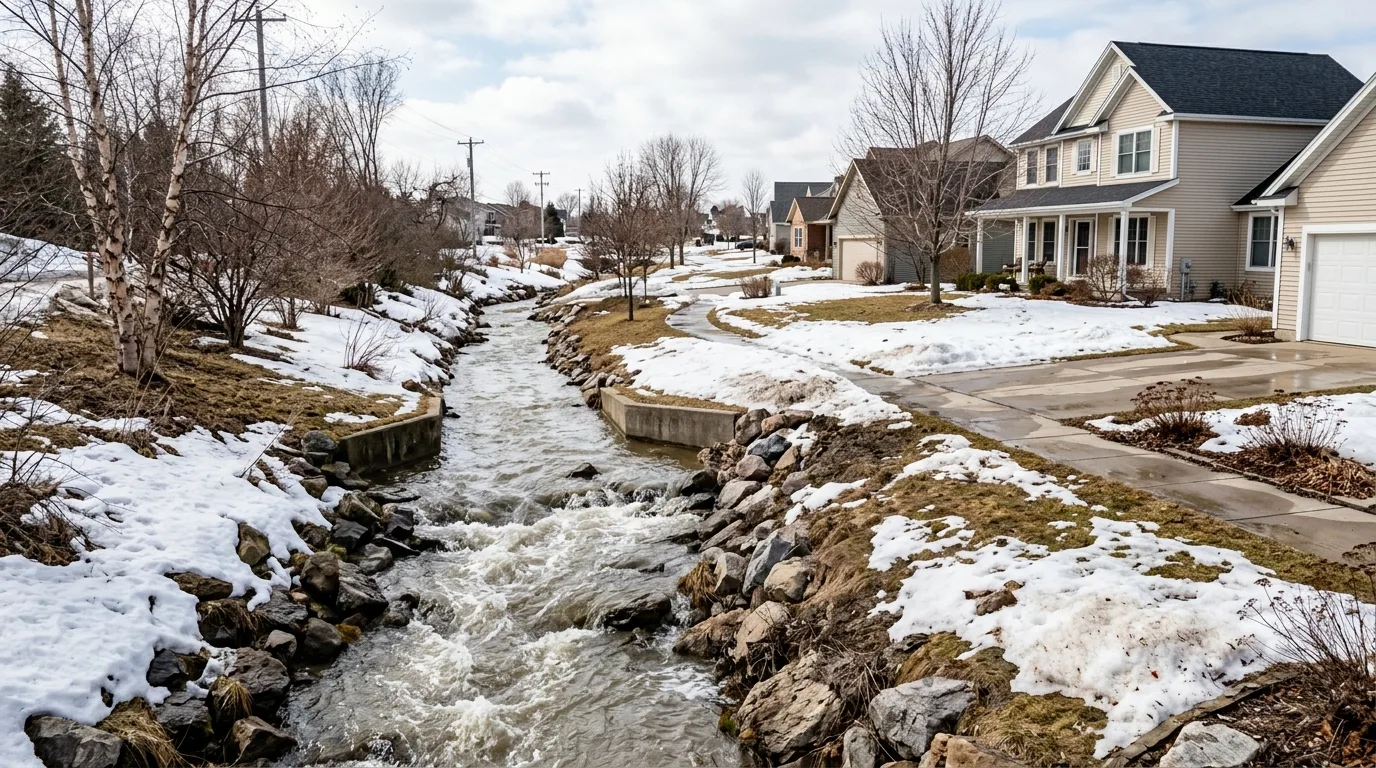
Basement snowmelt flooding: March through May brings the highest volume of extraction calls in Millcreek. Sump pump failures and foundation seepage can introduce hundreds of gallons into a finished basement quickly. Our crews carry portable submersible pumps for rapid removal of high-volume basement events.
Appliance overflow: Dishwashers, washing machines, and refrigerator ice makers can discharge significant water volumes before the homeowner discovers the event. Extraction addresses the visible water; moisture mapping identifies how far it has migrated under flooring and into cabinets.
Storm event flooding: Millcreek’s position near the Wasatch Mountains makes it vulnerable to both spring snowmelt flooding and summer monsoon flash flooding. Both scenarios require immediate extraction and contamination assessment.
What Happens After Extraction
Extraction removes standing and surface water, but it cannot remove moisture that has wicked into structural materials. After extraction, commercial air movers and dehumidifiers are placed based on the moisture map — typically 1 air mover per 50 square feet of affected area, with dehumidifiers sized to the total moisture load.
Drying runs continuously for 3–5 days in Millcreek’s climate, with daily moisture readings documented by the technician. The structure is not cleared for reconstruction until all materials reach the dry standard established in the IICRC S500 protocol. For a full breakdown of water damage restoration timeline in Millcreek, see our separate guide.
Frequently Asked Questions
How long does emergency water extraction take in Millcreek?
For a typical residential event, bulk extraction takes 2–4 hours. Carpet extraction and detailed moisture mapping add another 1–2 hours. Total time on-site for the extraction visit is typically 3–6 hours depending on event size. Structural drying then runs 3–5 additional days with daily monitoring visits.
Can I use a shop vac for water extraction in my Millcreek home?
For very small events (under 10 sq ft of water on a hard surface, caught immediately), a shop vac can address the bulk liquid. For any event involving standing water across more than a small area, or any event where water reached subfloor or walls, professional truck-mounted extraction is required. Consumer equipment cannot match the extraction rate or reach the moisture in structural assemblies.
Will the extraction crew make a mess removing water?
Professional extraction is a controlled process. We use protective floor runners and set up equipment to minimize disruption. Water and extracted material are discharged through hoses to the truck — there is no mess left in the home. We clean up after ourselves as part of the service.
Start Your Water Damage Recovery Now
Call Millcreek Water Damage Restoration at (877) 698-1311 — 24/7 emergency extraction throughout Millcreek, Murray, Salt Lake City, and Salt Lake County.
Related resources: