5 Signs of Hidden Water Damage in Millcreek Homes
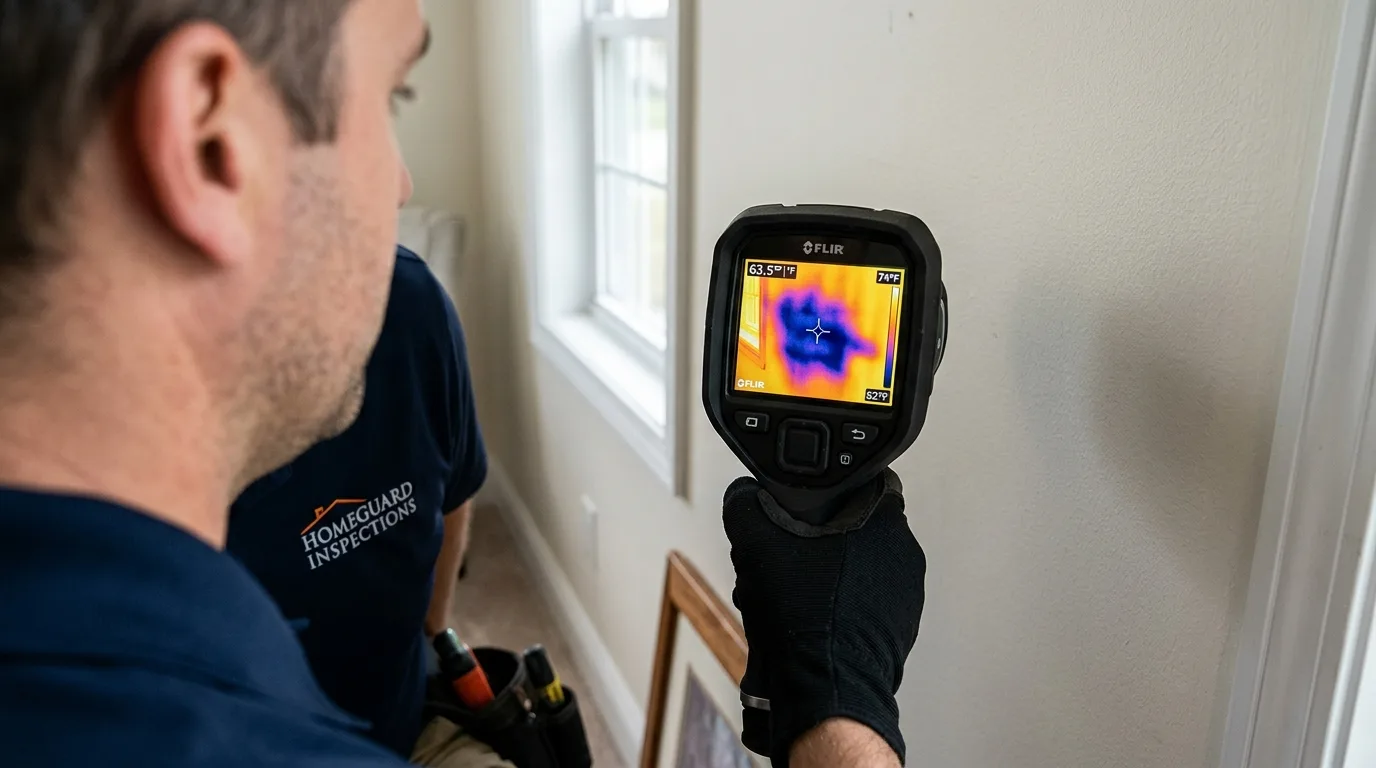
The water damage events that cause the most expensive repairs in Millcreek are often not the dramatic ones — the burst pipes that wake you up at 2 AM or the basement flooding you discover on your way to work. They’re the slow, hidden events: the supply line fitting seeping inside a wall for months, the window well leaking a cup of water per rain event into the framing, the crawlspace condensation accumulating on joists through the winter. These hidden events are discovered weeks or months later — often by a real estate inspector, sometimes by a musty smell, occasionally when a wall or ceiling suddenly softens or shows discoloration.
In this guide, we cover the five most reliable signs of hidden water damage in Millcreek homes, why Utah’s low ambient humidity can mask these signs until damage is advanced, and what to do if you suspect hidden moisture.
Suspect Hidden Water Damage in Your Millcreek Home?
Get a professional moisture assessment before mold develops. Call (877) 698-1311.
Why Hidden Water Damage Is Especially Tricky in Millcreek
Millcreek’s dry climate creates a specific challenge with hidden water damage: Utah’s low ambient humidity causes surface evaporation that dries visible surfaces quickly, masking the moisture that persists inside wall assemblies and subfloor systems.
A homeowner who notices a damp spot on drywall in January may see it disappear within 24 hours as the surface dries in Millcreek’s heated, low-humidity interior air. The moisture that caused that surface dampness — inside the wall cavity, soaking the paper facing of the drywall and the insulation behind it — persists for weeks without professional dehumidification. Mold colonization begins inside the wall in that moisture environment, entirely invisible to surface observation.
This is why professional moisture assessment uses calibrated meters and thermal imaging rather than visual inspection. Surface appearance in Millcreek homes is an unreliable indicator of structural moisture content.
Sign 1: Musty Odor Without Visible Mold
The most reliable early indicator of hidden water damage in Millcreek homes is a persistent musty, earthy smell — particularly in basements, closets on exterior walls, or bathrooms. Mold produces volatile organic compounds (MVOCs) as a byproduct of metabolic activity, and these compounds create the characteristic musty odor that precedes visible surface mold by days to weeks.
If you notice a musty smell concentrated in a specific area — not general house mustiness, but localized to one room or wall — treat it as a positive indicator of hidden moisture and mold until proven otherwise. Schedule a professional moisture assessment that includes air sampling before the mold expands further.
The Evergreen and Olympus Hills neighborhoods of Millcreek, where many homes have older basement construction and finished basement spaces, report musty odor discoveries most frequently following spring water events that appeared to resolve without professional drying.
Sign 2: Unexplained Increase in Water Bill
A water bill that increases 10–20% or more without a change in household usage patterns is a strong indicator of a slow continuous leak somewhere in your supply system. In Millcreek, where water rates are metered, a hidden supply line leak will consistently elevate your monthly bill by a detectable amount.
Compare your current bill to the same month in prior years, not just to the previous month (which may reflect seasonal usage variation). A consistent elevation across multiple billing periods without explanation warrants a professional plumbing inspection and moisture assessment of suspected wall cavities.
Supply line leaks inside walls in the Canyon Rim and Wasatch Hollow neighborhoods — particularly at fitting connections in exterior walls — are a common source of slow hidden water damage that accumulates for months before any visible sign appears.
Sign 3: Soft, Spongy, or Stained Flooring
Flooring that has developed softness, sponginess, or surface staining in localized areas often indicates subfloor saturation from below — from a slab with a slow crack allowing groundwater intrusion, from a crawlspace condensation issue, or from a supply or drain line leak under the floor.
Hardwood flooring that cups (edges raise above center) or buckles indicates moisture absorption from below. LVP flooring that develops bubbling or gaps at joints has typically experienced moisture from below or within the subfloor. Tile floors that develop grout cracking or individual tiles that crack without impact suggest movement in the substrate below — often from moisture-induced expansion and contraction.
These signs are detectable to the eye but easily dismissed as normal settling or wear. A moisture meter reading of the subfloor in these areas will quantify whether the issue is ongoing moisture rather than historical damage.
Professional Moisture Assessment in Millcreek
Thermal imaging and calibrated moisture meters find hidden water damage before mold develops. Call (877) 698-1311.
Sign 4: Discoloration or Staining on Walls or Ceilings
Water staining on ceilings and walls is the most visible sign of hidden water damage — but homeowners frequently dismiss stains that appear dry and old as historical rather than active. Active moisture staining has several characteristics: irregular yellowish-brown rings that grow over time, new staining appearing after rain events or snowmelt periods, and staining that reappears after painting.
In Millcreek, ceiling staining in upper floors often indicates roof issues or ice dam damage from winter snowfall accumulation. Staining along exterior walls at floor level — particularly in basements — indicates foundation seepage. Staining around window frames indicates window seal failure or ice dam water entry.
Rust staining is a more specific indicator. Rust-colored staining on drywall or trim indicates prolonged moisture at a metallic fastener — the water is wicking around a nail or screw and producing rust. This pattern is reliable enough that rust staining at baseboard nail locations is a standard diagnostic sign of ongoing floor-level moisture intrusion.
Sign 5: Peeling Paint, Bubbling Drywall, or Warped Trim
Paint and drywall that show physical deformation — peeling, bubbling, cracking, or tape joints lifting — indicate moisture has reached or penetrated the surface from behind. These are typically signs of ongoing rather than historical moisture: dried surfaces generally maintain their bond.
Trim boards, baseboards, and door casings that have warped, cupped, or separated from the wall are especially reliable indicators. Wood trim that absorbed water expands when wet and may not fully return to its original dimension when dried, leaving permanent gaps, warping, or delamination. In Millcreek homes, exterior door trim and window casing that shows warping often indicates a flashing failure allowing water intrusion at the building envelope.
What to Do If You Find These Signs
Don’t paint over it or patch it. Cosmetic repairs without addressing the moisture source will fail within weeks or months as the underlying moisture continues.
Schedule a professional moisture assessment. Calibrated moisture meters quantify whether structural materials are in the mold growth range. Thermal imaging identifies moisture patterns inside walls without destructive investigation. See our mold after water damage guide for more context on what professional assessment involves.
Address the source before the symptom. Foundation crack sealing, pipe repair, flashing replacement, or window resealing must precede any interior repair — otherwise the repair fails as the moisture continues.
Document with photos and call your insurance. If the moisture source is a sudden or accidental event (appliance failure, recently discovered supply line leak), your homeowner’s insurance may cover the investigation and repair. Document the signs with photos and call your agent.
Frequently Asked Questions
How does a professional find hidden water damage in Millcreek homes?
Professional moisture assessment uses two primary tools: calibrated digital moisture meters that measure electrical resistance in materials (higher resistance = higher moisture content), and thermal imaging cameras that reveal temperature differentials caused by evaporative cooling at wet surfaces. Together, these tools create a moisture map of the structure without destructive investigation, identifying affected areas that cannot be found visually.
Can hidden water damage in my Millcreek home affect the resale value?
Yes — significantly. Unresolved water damage, mold, and structural issues discovered during a real estate inspection can reduce sale price, trigger repair requirements before closing, or kill a sale entirely. Utah real estate law requires disclosure of known material defects. Resolving water damage issues before listing, with proper documentation of professional remediation, is the most effective approach.
If I suspect hidden water damage, should I call a mold inspector or a restoration company first?
For water damage assessment, a restoration company with moisture meter and thermal imaging capability is the appropriate first call. They can quantify whether active moisture is present and whether material removal for investigation is warranted. A separate mold inspector (certified industrial hygienist) is appropriate for post-remediation clearance testing or if you want third-party verification of mold scope independent of the restoration company.
Find Hidden Water Damage Before It Becomes Mold
Professional moisture assessment for Millcreek and Salt Lake County homes. Call (877) 698-1311.
Related resources: