Mold After Water Damage: Millcreek Homeowner's Guide
One of the most expensive mistakes Millcreek homeowners make after a water event is believing the problem is solved once the visible water is gone. Mold doesn’t need standing water to grow — it needs moisture content above a certain threshold inside wall assemblies, under flooring, or in ceiling cavities. And in Millcreek’s climate, where surface evaporation can dry visible surfaces within a day or two, the hidden moisture that supports mold growth can persist for weeks without commercial dehumidification.
In this guide, we cover how and why mold develops after water damage in Millcreek, what the signs of hidden mold look like, what professional remediation involves under IICRC S520 standards, and what you should do if you suspect mold in your home.
Mold After Water Damage in Millcreek?
Get a professional mold assessment from our IICRC-certified team. Call (877) 698-1311.
Why Mold Develops So Readily After Water Events in Millcreek
Mold colonization requires three things: moisture, organic material (wood framing, drywall paper, insulation), and temperatures above 40°F. Water damage events provide abundant moisture and organic material. Millcreek homes maintain interior temperatures above 65°F year-round, well within mold’s growth range.
The 24–48 hour colonization window is not a dramatic overstating — it represents the actual time frame for early mold hyphae to penetrate porous materials. The specific mechanism in Millcreek homes is that wall assemblies retain moisture far longer than surfaces. When a burst pipe saturates exterior wall framing and insulation in January, the interior surface of the drywall may feel dry within 24 hours due to Utah’s low indoor humidity. But the moisture content inside the wall cavity — where wood framing and faced insulation were wet — may remain in the mold growth range for 2–4 weeks without active commercial dehumidification.
This is the scenario that produces the most avoidable mold damage in Millcreek. Homeowners who address the surface water but don’t have the wall cavity professionally dried discover mold weeks later when they smell the characteristic earthy, musty odor, or notice discoloration at baseboards and drywall seams.
What Mold Looks Like After Water Damage
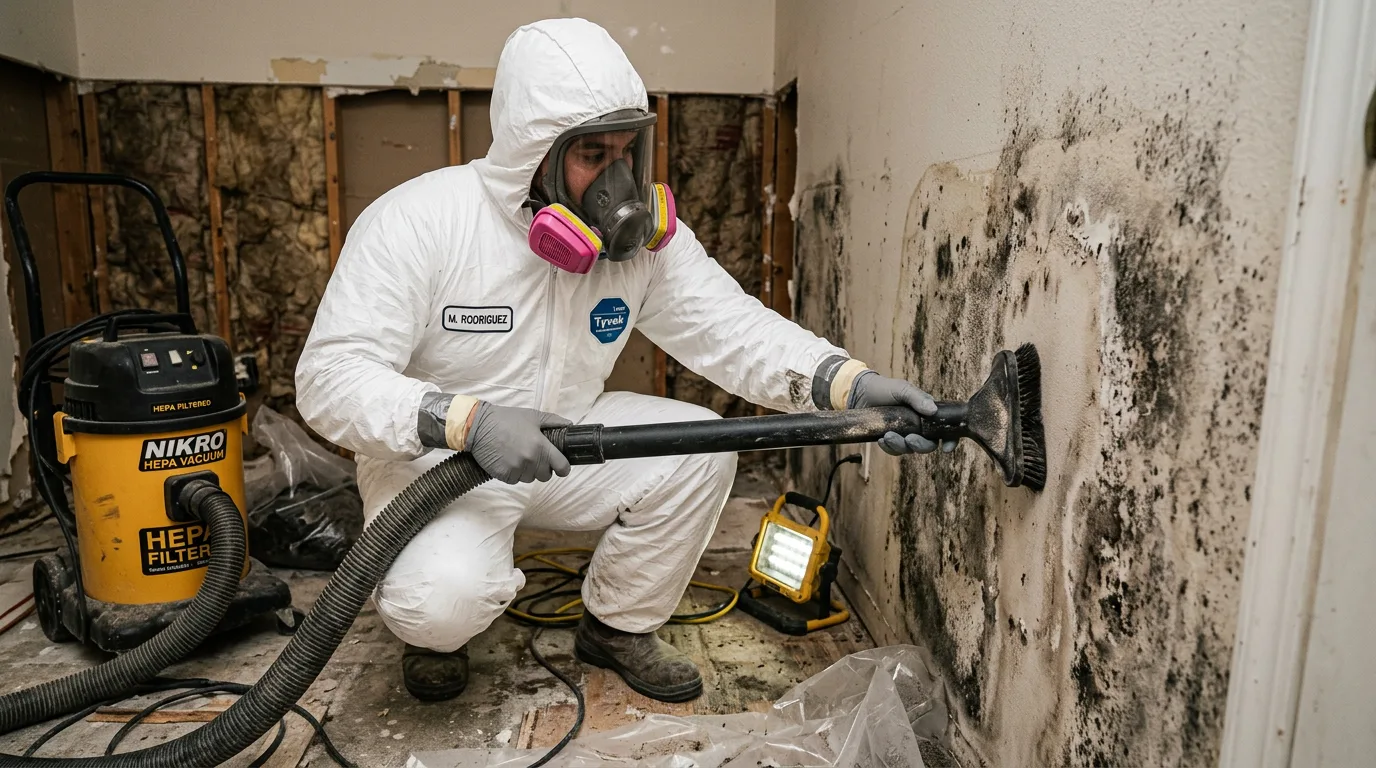
Visible surface mold: Fuzzy growth ranging from white to gray to black or green, appearing on drywall, wood, tile grout, or ceiling materials. Visible surface mold typically indicates a larger contamination zone inside the assembly beneath it — surface mold is the output of colonization that began inside.
Discoloration without visible growth: Dark staining on drywall or wood that appears after a water event may be early mold growth, efflorescence (mineral deposits from water migration), or dirt carried by floodwater. Lab testing distinguishes mold staining from other discoloration.
Deteriorating drywall paper: Peeling, bubbling, or powdery surface on drywall after a water event can indicate moisture-driven breakdown of the paper facing — the primary food source for mold colonizing drywall.
Musty odor without visible mold: The most common presentation of hidden mold in Millcreek homes. A consistent earthy or musty odor concentrated in a specific room or area — particularly near exterior walls, in closets, or in basement spaces — after a water event indicates active mold colonization that has not yet emerged on the visible surface.
Rust or water staining on baseboard trim: Rust staining on metal nail heads in baseboards indicates water reached the floor level and soaked into the wall cavity. This is a reliable indicator of hidden moisture that may have created mold conditions inside the wall.
See or Smell Mold in Your Millcreek Home?
Professional mold assessment with IICRC-certified technicians. Call (877) 698-1311 for a Millcreek inspection.
Types of Mold Found After Water Damage
Stachybotrys chartarum (Black Mold): The species most commonly associated with health concerns in the media. It requires chronically wet conditions — typically materials that were wet for extended periods (more than a week). Most post-water-damage mold in Millcreek homes that was addressed within days is not Stachybotrys but rather more common species.
Cladosporium: One of the most common mold species in water-damaged building materials. Appears as dark green or black clusters. Not highly toxic but requires professional remediation to prevent spread.
Penicillium/Aspergillus: A large group of common indoor molds that colonize rapidly after water events. Often the first mold types to appear within the 24–72 hour window after water intrusion.
Chaetomium: Common on drywall after water damage. Produces a musty odor and is often associated with the cotton-like appearance on water-damaged drywall.
The specific species present is less important than the scope of contamination and whether the moisture source has been addressed. Species identification is done by lab analysis during post-remediation clearance testing.
What Professional Mold Remediation Involves in Millcreek
Professional mold remediation in Millcreek follows the IICRC S520 Standard for Professional Mold Remediation, which establishes the protocols that insurance adjusters and lenders expect.
Assessment: Moisture meter readings and air sampling establish the scope of contamination. Air sampling reveals elevated spore counts even before mold is visible.
Containment: Polyethylene sheeting and negative air pressure machines with HEPA filtration isolate the affected area. This prevents spores from spreading to unaffected rooms during remediation.
Removal: All contaminated porous materials (drywall, insulation, wood trim) are removed in sealed bags following EPA Category 3 waste protocols. Non-porous structural materials (concrete block, steel) can be HEPA-vacuumed and treated with antimicrobial agents.
Antimicrobial treatment: EPA-registered hospital-grade antimicrobial agents are applied to all surfaces in the remediation zone after material removal.
Air scrubbing: HEPA air scrubbers run continuously throughout remediation and for a period after material removal to capture airborne spores.
Post-remediation clearance testing: Third-party lab air sampling confirms that spore counts have returned to normal ambient levels. Only at this point is the space cleared for reconstruction. This clearance test is what separates professional remediation from surface cleaning.
How to Prevent Mold After a Water Event in Millcreek
The single most effective mold prevention step after a water event in Millcreek is professional structural drying within the first 24 hours. Commercial dehumidifiers and air movers are required to achieve drying inside wall assemblies — fan-only approaches address surface moisture but not the hidden moisture that causes mold.
If you have had a water event, do not wait for visible mold before calling for an assessment. The cost of professional drying ($500–$2,000 for an average event) is significantly less than the cost of mold remediation plus reconstruction ($3,000–$10,000 for a typical wall mold situation). The 5 signs of hidden water damage guide covers additional indicators to watch for.
Frequently Asked Questions
How long after a water event does mold start growing in Millcreek?
Mold hyphae begin penetrating porous materials within 24–48 hours of sustained moisture exposure. Visible mold on surfaces typically appears 5–14 days after the water event if materials are not professionally dried. In Millcreek’s climate, interior surfaces may feel dry within 24 hours while wall cavity moisture remains in the mold growth range for weeks without commercial dehumidification.
Can I test for mold myself after water damage?
Consumer mold test kits provide limited information — they can confirm the presence of mold spores but cannot quantify the scope of contamination, identify species accurately, or establish whether contamination levels exceed safe thresholds. Professional air sampling by a certified industrial hygienist provides actionable data. We can recommend certified mold testing providers in Salt Lake County.
Is mold after water damage covered by homeowner’s insurance in Utah?
Most homeowner’s insurance covers mold remediation when it results from a covered water damage event (burst pipe, appliance failure). Mold from long-term neglect of a slow leak is typically not covered. Review your specific policy — mold coverage limits vary, and some policies have separate mold sublimits. We document all mold in relation to the originating water event to support your claim.
IICRC Mold Remediation in Millcreek, Utah
Containment, removal, antimicrobial treatment, and clearance testing. Call Millcreek Water Damage Restoration at (877) 698-1311.
Related resources: