Basement Flooding Millcreek, UT: Causes, Prevention & Restoration
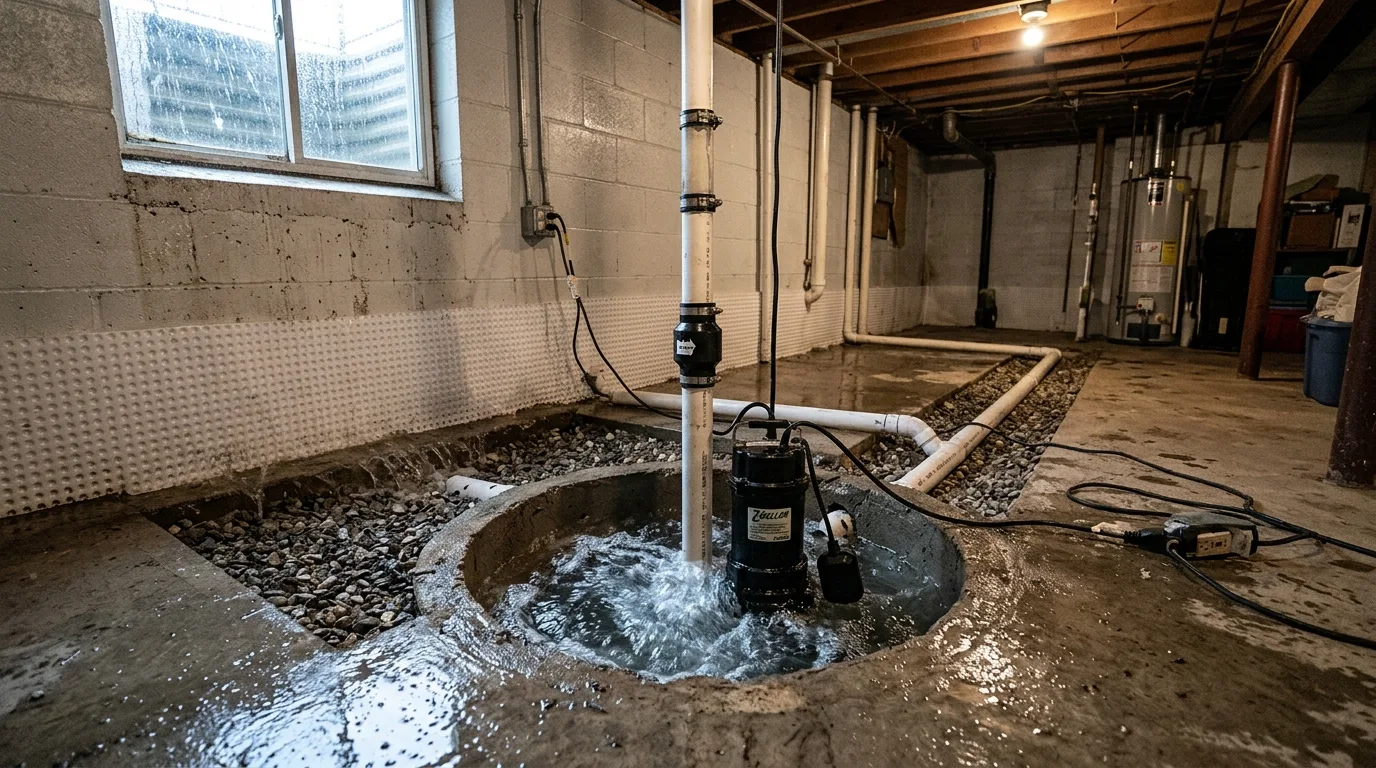
Walk through Millcreek in late April after a heavy snowmelt year and you’ll find restoration trucks in driveways across the Olympus Hills and East Millcreek neighborhoods. Basement flooding is one of the most common and costly home emergencies in this part of Salt Lake County — and in a year when the Wasatch snowpack is more than double normal, the risk is elevated for every homeowner whose basement relies on a sump pump and good drainage to stay dry.
In this post, we cover why Millcreek basements flood specifically, the prevention steps that make the biggest difference before the event, what to do immediately when flooding occurs, and how professional restoration returns a flooded basement to pre-loss condition.
Basement Flooding in Millcreek? Call Now.
24/7 emergency flood extraction throughout Millcreek and Salt Lake County. (877) 698-1311.
Why Millcreek Basements Are Especially Vulnerable
Most basement flooding guides treat the subject generically. Millcreek has specific characteristics that make flooding more common here than in many comparable-size communities.
The city sits at the base of the Wasatch Range along the I-215 corridor, positioned to receive concentrated snowmelt from Millcreek Canyon and the slopes above the Olympus Hills neighborhood. The Millcreek soil series — a very deep soil formed in alluvium from sandstone and quartzite with a sandy/gravelly subsoil at 20–30 inches — has moderate-to-rapid permeability. During spring snowmelt, the upper soil layer saturates faster than the subsoil can discharge it laterally, creating a temporarily elevated water table that pushes hydrostatically against foundation walls.
Older homes in the Evergreen and Canyon Rim areas of Millcreek were built in the 1950s and 1960s with foundation construction standards that didn’t account for this hydrostatic load during heavy snowmelt years. Foundation walls that were adequate for typical precipitation are often unable to handle the pressure of a double-snowpack melt year.
Salt Lake County’s older sewer infrastructure adds another risk vector. When municipal sewer systems handle peak snowmelt runoff, sewer lines operating near capacity can surcharge — creating backpressure that pushes sewage backward through private laterals and into homes through floor drains. This Category 3 contamination scenario requires different cleanup protocols than clean-water basement flooding.
The Three Ways Millcreek Basements Flood
Hydrostatic seepage through foundation walls and floor. Water-saturated soil creates pressure against foundation walls that exceeds the waterproofing capacity of older construction. Water enters through wall cracks, cove joints (where wall meets floor), and floor slab cracks. Entry is typically gradual initially, then increases as saturation deepens.
Sump pump failure or overload. Most Millcreek basements with finished space rely on sump systems. When runoff volume exceeds pump capacity, or the pump fails (from motor wear, power outage, or float switch failure), water rises from the sump pit and spreads across the floor.
Window well overflow. Window wells that fill with snowmelt faster than the drain can evacuate allow water to enter through the window itself. This is particularly common in Olympus Hills homes where window wells are at or below the grade level of snowmelt runoff paths.
Prevention Steps That Actually Work
Battery backup sump pump installation. The most impactful single prevention investment for Millcreek homeowners. A primary sump pump that loses power during a spring storm — when flooding risk is already high — loses its entire protective function. Battery backup systems maintain pumping function for 24–48 hours of continuous operation.
Interior perimeter drain system. For high-risk areas in Olympus Cove and Canyon Rim, an interior perimeter drain (French drain system installed below the basement floor slab) intercepts water before it rises and channels it to the sump. This is the most reliable solution for recurring hydrostatic seepage.
Window well covers. Polycarbonate covers over basement window wells prevent snowmelt and rain accumulation. The well drain should also be cleared annually and verified functional before spring runoff season.
Foundation crack sealing. Any visible crack in the foundation wall should be sealed from the interior using hydraulic cement for active leaks, or polyurethane injection for non-active cracks. Both are temporary solutions for significant hydrostatic pressure — an interior drain system addresses the underlying cause.
Downspout extension. Downspouts discharging within 3 feet of the foundation contribute meaningfully to basement water intrusion. Extend discharge at least 6 feet from the foundation.
Already Had Basement Flooding This Year?
Professional restoration prevents mold and saves structural materials. Call (877) 698-1311 for a free Millcreek assessment.
What to Do Immediately When Your Millcreek Basement Floods
1. Safety first. Do not enter if electrical equipment is submerged. Shut off power to the basement at the breaker panel before entering standing water.
2. Identify and stop the water source. Shut off the main water supply if a pipe is involved. If the source is external (snowmelt seepage, failed sump), identify the failure point and address it if possible (restart pump, clear pump discharge line, etc.).
3. Call a restoration company. Do this before moving items or attempting cleanup. Water damage restoration requires documentation of the original condition for your insurance claim.
4. Document with photos and video. Walk the entire basement and capture the extent of flooding, saturated materials, and water entry points before anything is moved or disturbed.
5. Move valuables to higher ground if safe to do so without entering deep water.
6. Do not attempt extraction with consumer equipment. A shop vac cannot handle a flooded basement in the time available to prevent structural damage. Professional truck-mounted extraction is required.
Types of Basement Flooding and Restoration Scope
Category 1 (clean water) — hydrostatic seepage or rain: Standard extraction, structural drying, material salvage where possible. Carpet pad removed; flooring assessed for salvageability. Wall materials assessed based on moisture readings — not visual inspection alone.
Category 2 (gray water) — appliance failure, overflow: Disinfection required for all porous materials contacted. Higher percentage of material removal than Category 1.
Category 3 (sewage backup): Full biohazard protocols required. All porous materials that contacted sewage are removed and disposed. This scenario requires specialized cleanup — see our sewage backup cleanup service for details.
How Long Does Basement Restoration Take?
Basement flood restoration in Millcreek follows this approximate timeline: extraction takes 3–6 hours; structural drying runs 3–5 days with daily monitoring; material removal (if required) adds 1–2 days; reconstruction of a full finished basement typically takes 2–4 weeks. Read our detailed water damage restoration timeline guide for a full breakdown by event type.
Frequently Asked Questions
Does homeowner’s insurance cover basement flooding in Millcreek?
Standard homeowner’s insurance covers sudden and accidental water damage — burst pipes, appliance failures, and sump pump failure (if you have sump pump failure coverage). It does not cover flooding from external groundwater or rising surface water without separate flood insurance. Review your specific policy and endorsements. See our full guide on insurance coverage for water damage in Millcreek.
How do I know if my flooded basement has mold?
Mold is not always visible during or immediately after flooding. If your basement flooded and was not professionally dried within 48–72 hours, mold colonization inside wall cavities is a realistic possibility even if surfaces appear dry. A musty odor is the most common early indicator. Professional mold assessment using air sampling is the only reliable way to determine whether colonization has occurred.
Can I prevent basement flooding with just a better sump pump?
A high-capacity sump pump with battery backup is the single most impactful prevention measure for most Millcreek basements, but it addresses one failure mode — pump overload or failure. Foundation cracks, window well overflow, and severe hydrostatic pressure require additional solutions. For high-risk Olympus Cove and Canyon Rim properties, an interior perimeter drain system is the comprehensive solution.
Basement Flooding Experts in Millcreek
Millcreek Water Damage Restoration handles basement flooding from extraction to full reconstruction. Call (877) 698-1311 — Salt Lake County, 24/7.
Related resources: