How Long Does Water Damage Restoration Take in Millcreek, UT?
“How long is this going to take?” is one of the first questions homeowners ask after a water damage event in Millcreek — and it’s the right question to ask. The timeline varies significantly based on event type, affected materials, and the scope of required reconstruction. Understanding what drives each phase helps you manage expectations, coordinate with your insurance adjuster, and make informed decisions about temporary housing if needed.
In this guide, we break down every phase of water damage restoration from extraction through final reconstruction, with realistic timeframes for Millcreek homeowners based on common event types we encounter throughout Salt Lake County.
Water Damage in Millcreek? Get a Timeline Assessment.
We'll tell you honestly how long your specific situation will take. Call (877) 698-1311, 24/7.
Why the Timeline Varies So Much
Water damage restoration in Millcreek does not follow a single timeline because the scope is entirely determined by the specifics of the event. A dishwasher overflow on a hard floor discovered within an hour may be fully resolved in a day or two. A burst pipe in an exterior wall in Canyon Rim that flowed overnight into a finished basement with carpet may take 3–4 weeks from event to completed reconstruction.
Three factors drive the timeline more than anything else: how quickly extraction begins (earlier = faster total timeline), how deeply water penetrated into structural materials (deeper saturation = longer drying), and what reconstruction scope is required (surface finishes vs. full structural rebuild).
Phase 1: Emergency Water Extraction (Hours 1–6)
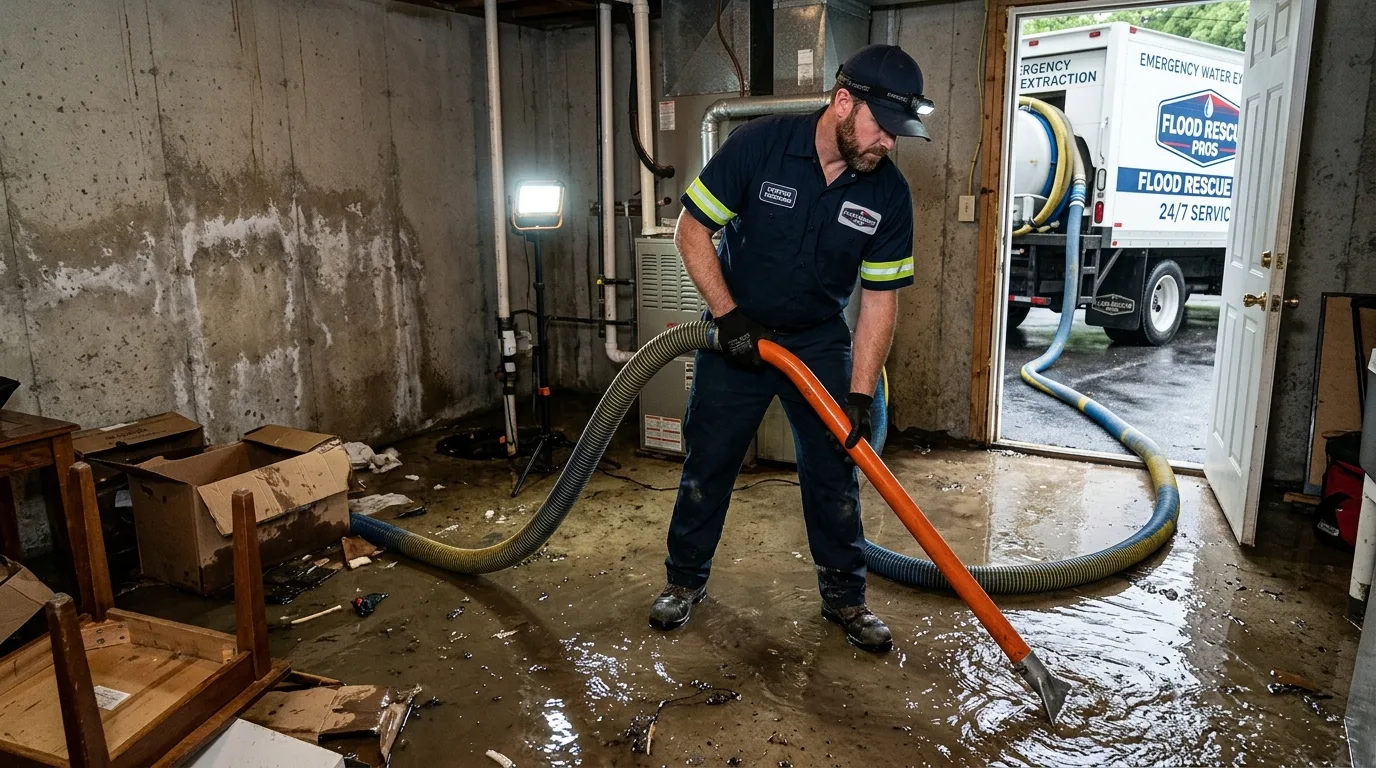
Extraction is the first response after an event and the most time-compressed phase. Truck-mounted extraction units arrive and begin removing standing water immediately. For most residential events in Millcreek:
- Standing water extraction from an average-sized basement: 2–4 hours
- Carpet and subfloor extraction: add 1–2 hours
- Detailed moisture mapping: add 1–2 hours
- Total extraction visit: 3–8 hours for most events
For very large events — multiple flooded rooms, high water volume — extraction may require two visits or additional equipment. The extraction phase is complete when standing and surface water is removed and the moisture map establishes the full scope of infiltration.
Phase 2: Structural Drying (Days 1–5)
This is the phase most homeowners underestimate because it’s invisible — the equipment runs, the house looks increasingly normal, and it’s unclear why it’s taking so long. Structural drying is the process of removing moisture from inside wall assemblies, subfloors, and ceiling cavities to IICRC dry standards.
In Millcreek’s climate — with Utah’s low ambient humidity and xeric moisture regime — structural drying typically takes 3–5 days for standard water events. This is faster than in humid coastal markets where dehumidifiers fight ambient moisture as well as structural moisture.
Factors that extend drying beyond 5 days:
- Events discovered and addressed late (24+ hours after occurrence)
- Multiple affected floors
- Dense insulation that holds moisture longer
- Winter events where cold temperatures slow evaporation from structural materials
- Very large affected areas requiring more dehumidifier capacity
Daily monitoring with calibrated moisture meters is required throughout this phase. The drying phase is not complete until moisture readings meet the documented dry standard — not when a set number of days have elapsed.
Phase 3: Material Removal (If Required — Days 3–6)
Material removal overlaps with structural drying in many cases — wet materials are removed to accelerate drying of the structural elements behind them. Typical material removal items:
- Drywall up to the wet line (often 12–16 inches above floor level for minor events; full wall panels for significant events)
- All carpet pad (always removed — cannot be dried in place)
- Water-damaged insulation
- Any flooring with subfloor involvement
Material removal from a typical Millcreek basement water event takes 1–3 days depending on scope. If the event affected multiple rooms or required full wall-height drywall removal, this phase may run longer.
Need a Realistic Timeline for Your Millcreek Water Damage?
We assess and tell you exactly where your event falls. Call (877) 698-1311 — free, no-obligation assessment.
Phase 4: Mold Remediation (If Required — Days 5–10)
If mold is discovered during material removal — or if the event went unaddressed for more than 48 hours before professional response — mold remediation is required before reconstruction can begin. This adds 3–5 days for containment, removal, treatment, and clearance testing (including 24–48 hours for lab results).
Not all water damage events require mold remediation. Events addressed within 24 hours with professional drying typically do not result in mold growth. Events discovered days after occurrence and those where materials were dried inadequately by DIY methods have elevated mold risk.
Phase 5: Reconstruction (Days 7–30+)
Reconstruction is the most variable phase. Timeline depends entirely on the scope of material removal and the complexity of the work. Rough timelines for Millcreek reconstruction:
Minor event (one room, drywall patching, paint): 1–3 days
Moderate event (multiple walls, new drywall, insulation, flooring): 1–2 weeks
Significant basement restoration (full walls, new insulation, subfloor, flooring, trim, paint): 2–4 weeks
Extensive multi-room or multi-floor event: 4–8 weeks or longer, particularly if structural framing, electrical, or plumbing repairs are required
Note: Reconstruction cannot begin until Millcreek building permits are issued (typically 5–10 business days for standard permits) and structural drying is verified complete. For pre-1980 Millcreek homes, asbestos and lead paint testing must be completed before any demolition begins, which adds 3–7 days for testing and results.
What This Looks Like for Common Millcreek Events
Burst pipe discovered immediately (Canyon Rim winter event):
- Extraction: half-day
- Drying: 3–5 days
- Material removal: 1–2 days
- Reconstruction: 3–7 days
- Total: approximately 10–15 days
Basement flooding from sump pump failure (Olympus Cove spring event):
- Extraction: 1 day
- Drying: 4–5 days
- Material removal: 1–3 days
- Reconstruction: 2–4 weeks
- Total: approximately 3–5 weeks
Sewage backup (basement floor drain):
- Extraction and biohazard removal: 1–2 days
- Drying and sanitization: 3–5 days
- Material removal (mandatory for all porous materials): 1–3 days
- Clearance testing: 1–2 days
- Reconstruction: 2–4 weeks
- Total: approximately 4–6 weeks
Types of Delays That Extend the Timeline
Permit processing: Millcreek building permits typically take 5–10 business days. Filing promptly after scope finalization is critical.
Asbestos testing results: Pre-1980 homes require testing results before demolition. Testing and lab turnaround typically takes 3–7 days.
Insurance adjuster inspection timing: Some adjusters request to inspect the damage before authorization of repair scope. We coordinate these inspections to minimize delays.
Material availability: Custom flooring, specific tile, or cabinetry may have lead times that extend the reconstruction phase. We recommend decisions early in the drying phase.
Frequently Asked Questions
How long does water damage extraction take in Millcreek?
For most residential events, extraction takes 3–8 hours including standing water removal, carpet and subfloor extraction, and detailed moisture mapping.
Can I live in my home during water damage restoration in Millcreek?
For minor events affecting one room, staying in the home is typically possible. For events involving basement flooding, sewage backup, mold remediation, or extensive drywall removal, temporary relocation may be necessary. We assess habitability during our initial visit and give you a clear recommendation.
How does Millcreek’s climate affect the drying timeline?
Utah’s low ambient humidity actually benefits structural drying timelines compared to coastal markets — commercial dehumidifiers achieve target moisture levels faster in Millcreek than in humid climates. Winter events dry more slowly because cold temperatures reduce evaporation rate from structural materials.
Get a Realistic Water Damage Timeline in Millcreek
From extraction through reconstruction — Millcreek Water Damage Restoration manages the whole process. Call (877) 698-1311.
Related resources: