Millcreek vs. Salt Lake City Water Damage: Key Differences
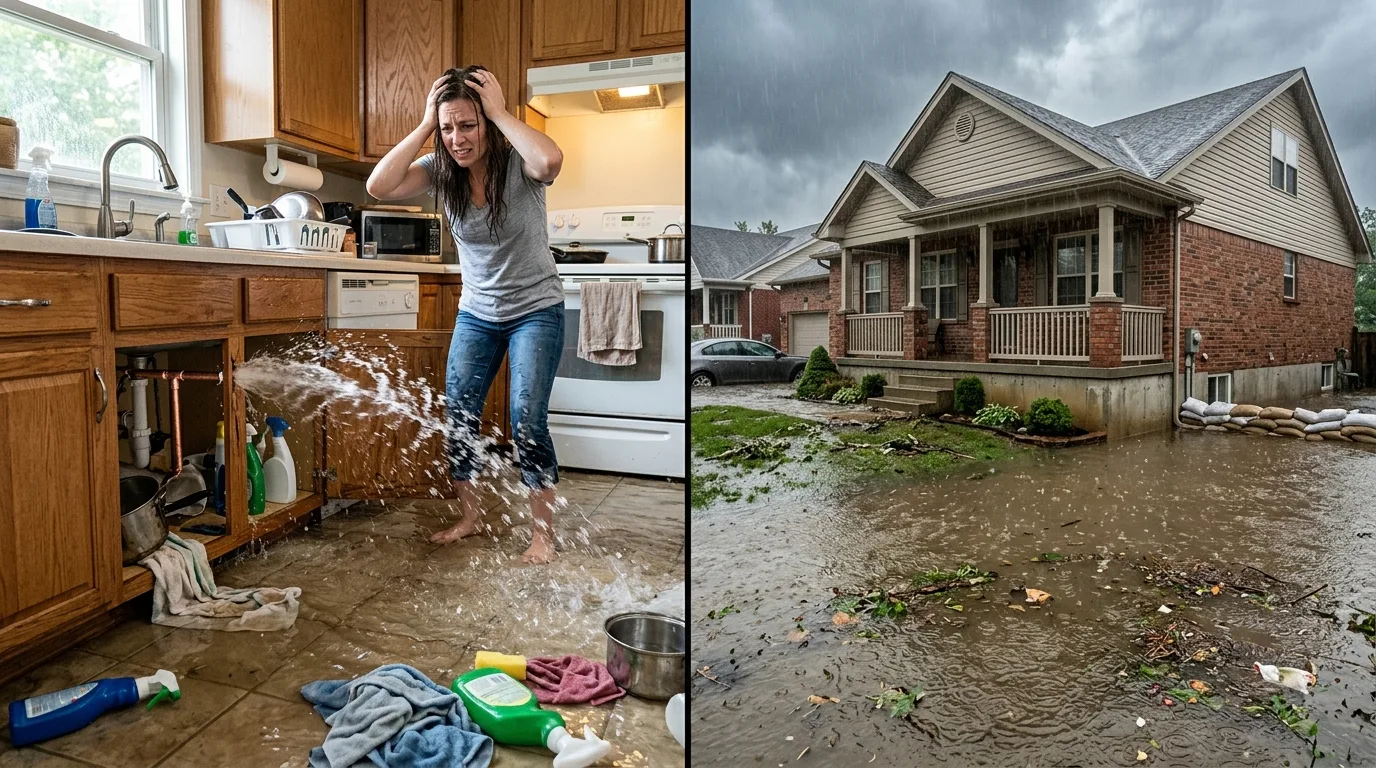
If you’ve read general Salt Lake City water damage guides and assumed they apply equally to Millcreek, you may be missing some important differences. Millcreek and Salt Lake City are adjacent communities in Salt Lake County, but their water damage risk profiles, soil conditions, regulatory environments, and common damage causes differ in ways that affect both prevention and restoration.
This guide compares the two communities across the factors that matter most to homeowners dealing with — or trying to prevent — water damage.
Water Damage in Millcreek? We Know Your Specific Risks.
IICRC-certified, locally experienced. Call (877) 698-1311 — 24/7 throughout Salt Lake County.
Geographic and Topographic Differences
Millcreek is an unincorporated area that became a city in 2016, positioned at the base of the Wasatch Mountains along Millcreek Canyon’s outlet. Its higher elevation relative to central Salt Lake City means it’s the first recipient of mountain snowmelt and has a direct alluvial fan relationship with two canyon drainages: Millcreek Creek and Neffs Creek. This geography creates concentrated spring flooding risk that is specific to Millcreek and not a general Salt Lake City characteristic.
Salt Lake City spans a much larger and more varied geographic range, from the Jordan River corridor on the west (with its own flooding dynamics) to the Avenues and Foothills neighborhoods on the east that share some Wasatch proximity. Salt Lake City’s older neighborhoods — the Central City area, the Avenues, and Capitol Hill — contain some of the oldest infrastructure in Utah, with sewer laterals and supply lines dating to the early 1900s.
Practical difference: Millcreek homeowners face more concentrated alluvial fan and snowmelt risk from specific local drainage systems (Neffs Creek). Salt Lake City homeowners in older districts face more infrastructure age risk — failing sewer laterals, galvanized supply lines, and cast iron drain systems that are reaching end of life.
Soil Conditions and How They Affect Water Damage
Millcreek’s soil is the Millcreek series — very deep alluvial soils formed in deposits from sandstone and quartzite with a sandy/gravelly subsoil at 20–30 inches. Under normal conditions, this soil drains well. Under heavy snowmelt saturation, it can transmit water laterally to foundation walls rapidly, and the granular subsoil provides limited filtration of contaminants.
Salt Lake City’s soils vary significantly across the city’s range. The valley floor areas near the Jordan River corridor contain heavier clay soils with lower permeability — soils that hold water longer and create prolonged hydrostatic pressure on foundations when saturated.
Practical difference for water damage: Millcreek’s sandy soil means foundation seepage events tend to be faster-onset but can resolve quickly when runoff volume drops. Salt Lake City clay soils can maintain hydrostatic pressure against foundations for extended periods after precipitation events end. Both create moisture mitigation challenges, but the timing and duration differ.
Regulatory Environment
Millcreek became an incorporated city in 2016 and has established its own building department with clear permit requirements: all construction requires a permit with limited exceptions, all contractors must hold Utah DOPL credentials, and pre-1980 homes require asbestos and lead paint testing before any demolition. The Millcreek Building Department is actively enforcing these requirements.
Salt Lake City has a more established building department with a longer regulatory history, online permit portal, and more complex review processes for historic districts and certain neighborhoods. Salt Lake City also has specific requirements for properties in historic overlay districts — a consideration for water damage repair in areas like the Avenues.
Practical difference: Both cities require permits for water damage structural repair. The specific processes differ — Millcreek’s newer department may have shorter review times; Salt Lake City’s process is more established. Any contractor familiar with Millcreek’s permit process can navigate both.
Serving Millcreek and Salt Lake City Water Damage
Our team knows the permit requirements for both communities. Call (877) 698-1311 for immediate response.
Common Damage Causes: How They Compare
Burst pipes are the leading winter water damage cause in both communities, but Millcreek’s older housing stock in Canyon Rim and Evergreen neighborhoods makes copper pipe failures from freeze-thaw cycling particularly common. Salt Lake City’s Avenues neighborhood has some of the oldest supply line infrastructure in the state — galvanized steel supply lines in Century-Plus homes that corrode and fail independent of freeze events.
Spring flooding is significantly more concentrated in Millcreek than in most Salt Lake City neighborhoods, due to the Neffs Creek and Millcreek Creek alluvial fan systems that directly affect Olympus Cove and Canyon Rim. Salt Lake City’s spring flooding risk is distributed differently — the Jordan River corridor carries significant flood risk, but most residential areas are not in direct alluvial fan zones.
Sewer backup is a shared risk across both communities, with Salt Lake City’s older infrastructure (some clay tile sewer laterals from the 1930s–1950s still in service in established neighborhoods) presenting higher root intrusion risk than Millcreek’s more recent infrastructure.
How to Find a Contractor Who Knows Both Markets
When selecting a water damage restoration contractor, the key criteria are the same for Millcreek and Salt Lake City: IICRC certification, Utah DOPL licensing, 24/7 emergency availability, and the ability to handle both mitigation and reconstruction phases with full permit compliance.
What differs is local knowledge — a contractor who understands the Neffs Creek alluvial fan risk in Olympus Cove provides better prevention guidance than one who treats every Wasatch Front community identically. We serve Millcreek, Salt Lake City, and communities throughout Salt Lake County with calibrated knowledge of each area’s specific risk profile.
Frequently Asked Questions
Is water damage more expensive to restore in Millcreek than Salt Lake City?
Pricing for water damage restoration is consistent across Salt Lake County — $1,383–$6,378 for most residential events, with extraction and drying running $3.50–$7.00 per square foot. Market rates do not significantly vary between Millcreek and Salt Lake City. The cost difference between properties is driven by event severity, contamination category, and scope — not location within the county.
Do the same permits apply in Millcreek and Salt Lake City for water damage repair?
Both communities require building permits for structural repair work, and both require Utah DOPL-licensed contractors. The specific permit process and review timelines differ because they are separate municipal building departments. Pre-1980 asbestos and lead paint testing requirements apply in both jurisdictions under Utah state law.
We have a property in Holladay near the Millcreek border — which rules apply?
Holladay is an incorporated city adjacent to Millcreek, with its own building department and permit process. The regulatory requirements are similar (Utah DOPL, permits for structural work), but Holladay’s specific processes apply to properties within Holladay’s municipal boundary. We serve Holladay and can navigate its requirements — call us for your specific situation.
Water Damage Restoration Across Salt Lake County
We serve Millcreek, Salt Lake City, Murray, Holladay, Cottonwood Heights, and beyond. Call (877) 698-1311, 24/7.
Related resources: